Intro
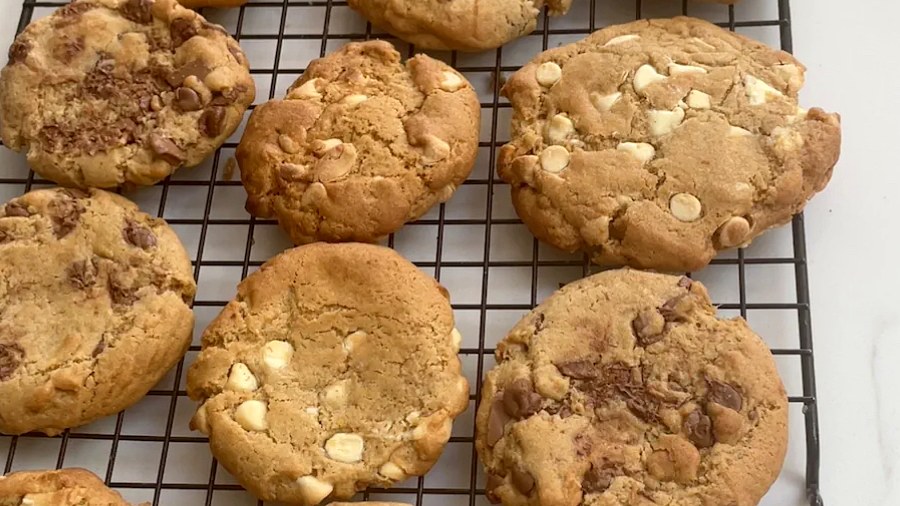
A proper bakery-style cookie is a particular thing: thick, with edges that hold and a soft, almost-underbaked middle, and enough texture that it feels handmade rather than stamped out. It’s not a secret recipe that gets you there — it’s a handful of small decisions, made on purpose. This guide pulls together my cookie recipes and thewhy behind each one, so whichever you bake, you understand what every step is doing. Start with a recipe, or read the technique section first if you like to know the rules before you break them.
The recipes
Our growing collection of cookies — each a full recipe with a serving scaler, metric-first quantities and allergens flagged.
- Bakery-style chocolate chip cookies — the flagship: one thick, soft-centred dough, made two ways (white chocolate chip and milk chocolate chip). Nut-free.Best place to start.
- Red velvet white chocolate cookies — soft, cocoa-tinged and just tangy, with white chocolate to echo the classic cream-cheese pairing. Nut-free.
More cookie recipes will join this page as they’re published.
The Craft — what makes or breaks a cookie
The difference between a flat, greasy cookie and a tall, chewy one usually comes down to four things:
Creamingjust enough. Beating butter and sugar too long whips in air the cookie can’t hold, and it spreads. You want them combined and a shade lighter — no more.(See:creaming.)
Resting the dough cold. A spell in the fridge firms the butter so the cookies set before they spread, which is where height comes from.(See:chilling dough.)
Pulling them early. They should look a touch soft in the centre when they come out — carryover heat on the tray finishes them. Bake to fully set and you’ve overbaked.
Understanding the raise. A little bicarbonate of soda encourages spread and browning; too much and they go flat and soapy.(See:bicarbonate of soda,the Maillard reaction.)
Glossary — the terms, defined
Each links to its own page:
- Creaming — beating fat and sugar together to combine and aerate.
- Chilling dough — resting dough cold to control spread and deepen flavour.
- Bicarbonate of soda — the raising agent that drives spread and browning.
- The Maillard reaction — the browning that builds that toasty, bakery flavour.
- Crumb — the internal texture: open, tight, chewy or short.
FAQ
Common cookie questions — each also has its own page:
- Why did my cookies spread too much? — usually warm dough, over-creaming, or too much raising agent.
- Why are my cookies flat? — melted butter, no chill, or an over-hot tray.
- Why are my cookies cakey rather than chewy? — too much flour or egg, or too much air beaten in.
- How do I get soft-centred cookies? — underbake slightly and rest on the tray.
- Can I freeze cookie dough? — yes; scoop, freeze, and bake from frozen with a minute or two more.
Free-from & dietary options
Both cookies here arenut-free as written — a good starting point if you’re baking for a nut allergy (do check your chocolate’s “may contain” line). The bakery-style cookies also have adairy-free / vegan swap to try — block plant butter, dairy-free chocolate and a flax egg. I’m still testing it, so treat it as a starting point rather than a promise.